Bristlecones survive so long for several reasons. One is that they live in areas so extreme they don't compete with other plants. Another is that their cells don't show signs of 'senescence' -- an ancient cell from a bristlecone looks and functions a lot like a young one, unlike human cells which age. A third reason, I believe, is that they have survived because their habitat isn't useful to us. Once we find some use for windswept 10,000 ft rideglines (besides a context for personal enlightenment and metaphorical soul-searching), watch out.
Bristlecone pines have what's called sectored architecture. That means a particular clump of roots at the bottom provides a particular clump of branches at the top (or side) water, through a stem channel specific to those parts of the tree. So, when a root section is damaged the part of the tree associated with that section dies. Often old Bristlecones, and especially ancient ones (a term which generally applies to trees past the 4,000 yr old mark -- the rest are merely 'old') display a section of living tree wrapping and winding its way around a mass of dead wood.
One thing that keeps the dead wood from disintegrating over the millennia is the trees' resin, which effectively seals the wood like a sock dipped in candle wax. The resin also helps the tree seal up wounds. It is for this reason that scientists can take core samples from the tree with an increment borer to analyze its rings and make an estimation about its age and the climatic conditions it has experienced.
The increment borer is like a hollow drill bit, so it can remove rods of wood the diameter of a pencil and several feet long. Because the hole is so small, it seals up with resin quickly. These rods of wood, often indicating thousands of rings, are then compared to other hollow rods of wood from other interesting trees. By combining overlapping patterns in core samples from different trees, scientists can assemble a climate history tens of thousands of years old. These folks are known as 'dendrochronologists' and 'extremely patient'. Interestingly, these patterns can also be used to date core samples taken from roof timbers in ancient dwellings.
Given that these techniques have been around since the 60's, it is fascinating that a guy named Donald Currey decided to cut down what seemed to him an especially interesting tree in 1964 just near Wheeler Peak in what is now Great Basin National Park. To make a long story short, the tree he cut down was the oldest one we've ever found. It was 4,862 years old.
It's a fascinating story involving different measures of science, ignorance, and politics depending on who you ask. Take a look at Michael Cohen's "A Garden of Bristlecones: Tales of Change in the Great Basin" for a good overview.
To see more photos, visit the Blue Boat Home Facebook site:
http://www.facebook.com/BlueBoatHome
Friday, September 16, 2011
Tuesday, September 13, 2011
Great basin artist in residency begins . . .
Great Basin blog
9/13/11
Great Basin National Park (GBNP) is a small part of the actual Great Basin, which stretches between California to Utah and Mexico (plus a dash of Oregon and Idaho). Roughly speaking, that's about 150 million acres.
That's a large charge for a relatively small 77,000 acre National Park.
That gives us about a 2,000:1 scale for all us math nerds. In other words, if you put your palm on the ground in GBNP that chunk of earth you have coved up is responsible for representing two thousand times its size, or the handprints of 1,999 other people.
One of the things that fascinates me here is that sense of scale; both the scale of what this park represents as well as the sheer magnitudes of size and age here.
Take Bristlecone pines, for example. Oldest single organisms on earth. Many are 4,000 years or older, although we don't know for sure without cutting them down (which happened to the oldest one we've found so far. Oops).
Rather than living in the arboreal land of milk and honey, they are found at extreme altitudes where the lack of soil, 100mph winds, and sub-zero winter temperatures give a Honey Badger smack-down (YouTube it, you won't be disappointed) to lesser competitors, diseases, and creatures that would end them.
Interestingly, climate change may be the biggest threat to the trees. As it becomes warmer and warmer at these high elevations, it makes infestations and competition from other species possible.
The other thing that strikes me here are the superlatives. Specifically, GBNP has been called both the quietest and darkest place in the continental US, and I believe it. Where I'm staying looks out over a valley that separates us from Utah, and it is quite the experience to look out for miles and miles at night and hear . . . absolutely nothing. I'm sure the folks at the visitor center hear the White Stripes a quarter mile away from my iPod.
There are many folks who have written much more eloquently and profitably than I have about this area. Here are a few I'm reading that I'd recommend:
The Void, The Grid, and The Sign: Traversing the Great Basin by William Fox
A fascinating exploration of the metaphors we use to explain this area; I'd recommend to people who have actually been to some part of the basin and range. Without having the physical experience of being here it wouldn't make any damn sense.
Basin and Range by John McPhee
I love me some McPhee, and this volume doesn't disappoint. It avoids being long, dense, or boring, which has been the fate of many a geology book. His story follows I-80, more or less, and almost makes me want to drive on it.
The Bristlecone Book: A Natural History of the World's Oldest Trees by Ronald Lanner
An interesting quick read on these fascinating creatures, and beautiful photography.
The Sagebrush Ocean: A Natural History of the Great Basin by Stephen Trimble
I know Steve, and the book comes alive for me because I can imagine his voice reading it. He also took the fantastic photos, just to rub it in that he can be the Bo Jackson of the art world.
9/13/11
Great Basin National Park (GBNP) is a small part of the actual Great Basin, which stretches between California to Utah and Mexico (plus a dash of Oregon and Idaho). Roughly speaking, that's about 150 million acres.
That's a large charge for a relatively small 77,000 acre National Park.
That gives us about a 2,000:1 scale for all us math nerds. In other words, if you put your palm on the ground in GBNP that chunk of earth you have coved up is responsible for representing two thousand times its size, or the handprints of 1,999 other people.
One of the things that fascinates me here is that sense of scale; both the scale of what this park represents as well as the sheer magnitudes of size and age here.
Take Bristlecone pines, for example. Oldest single organisms on earth. Many are 4,000 years or older, although we don't know for sure without cutting them down (which happened to the oldest one we've found so far. Oops).
Rather than living in the arboreal land of milk and honey, they are found at extreme altitudes where the lack of soil, 100mph winds, and sub-zero winter temperatures give a Honey Badger smack-down (YouTube it, you won't be disappointed) to lesser competitors, diseases, and creatures that would end them.
Interestingly, climate change may be the biggest threat to the trees. As it becomes warmer and warmer at these high elevations, it makes infestations and competition from other species possible.
The other thing that strikes me here are the superlatives. Specifically, GBNP has been called both the quietest and darkest place in the continental US, and I believe it. Where I'm staying looks out over a valley that separates us from Utah, and it is quite the experience to look out for miles and miles at night and hear . . . absolutely nothing. I'm sure the folks at the visitor center hear the White Stripes a quarter mile away from my iPod.
There are many folks who have written much more eloquently and profitably than I have about this area. Here are a few I'm reading that I'd recommend:
The Void, The Grid, and The Sign: Traversing the Great Basin by William Fox
A fascinating exploration of the metaphors we use to explain this area; I'd recommend to people who have actually been to some part of the basin and range. Without having the physical experience of being here it wouldn't make any damn sense.
Basin and Range by John McPhee
I love me some McPhee, and this volume doesn't disappoint. It avoids being long, dense, or boring, which has been the fate of many a geology book. His story follows I-80, more or less, and almost makes me want to drive on it.
The Bristlecone Book: A Natural History of the World's Oldest Trees by Ronald Lanner
An interesting quick read on these fascinating creatures, and beautiful photography.
The Sagebrush Ocean: A Natural History of the Great Basin by Stephen Trimble
I know Steve, and the book comes alive for me because I can imagine his voice reading it. He also took the fantastic photos, just to rub it in that he can be the Bo Jackson of the art world.
Sunday, September 4, 2011
National Park Residency
Take a look at the recent news:
http://www.parkrecord.com/ci_18815192
| ||||||||||||||||||
Tuesday, August 16, 2011
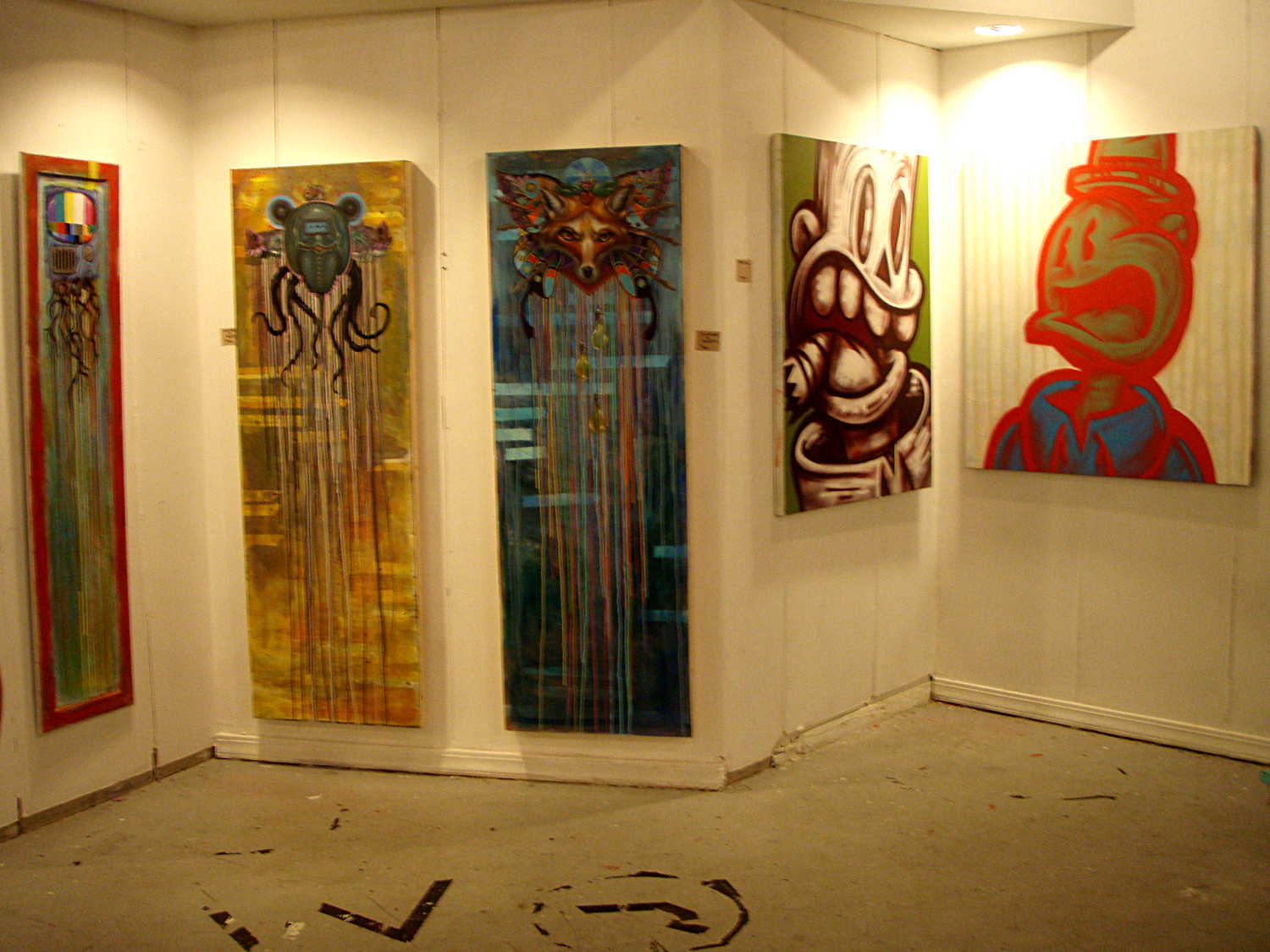
Graffiti at the Hive
The Hive Gallery in Salt Lake Recently held a fantastic exhibit on graffiti art. They're upstairs in Trolley Square, and the exhibit runs through Sept 1.
http://www.facebook.com/pages/Jonathon-B-Baker-Art/147545548625305?sk=wall
http://www.facebook.com/pages/The-Hive-Gallery/265738907399
I picked up this print by Jonathan Baker for ten bucks. He's also got a ton of his sketches there too; it's a great way to get some cool art and help keep venues like this one alive and well without spending tons.
http://www.facebook.com/pages/Jonathon-B-Baker-Art/147545548625305?sk=wall
http://www.facebook.com/pages/The-Hive-Gallery/265738907399
Saturday, July 30, 2011
Honda Trail 90s, Part 2
Some progress on the Trail 90s:
These bikes operated on a 6V electrical system, which is basically unheard of in modern vehicles. This is a replica taillight from a '33 Model A car, which also used a 6V system. |
![]() |
| This is the centrifugal timing advance mechanism on these bikes' ignition systems. Again, functional and cool-looking. |
![]() |
| A custom exhaust and battery box cover. |
Wednesday, July 27, 2011
Repair and Restoration
Recently I've found another artistic venue -- instead of turning old bombs and car parts into furniture and sculpture, I'm turning old furniture into . . . furniture again. I'm currently working on a series for clients (and a few for myself) that focus on either repairing old pieces to their former glory or transforming them into something new. For example:
![]() |
| An original side table, with 'charming' upholstry. |
![]() |
| The above table, re-finished and upholstered. |
![]() |
| An uncommon and difficult joint on the cabinets -- a mitered and tennoned half-lap joint. |
![]() |
| I'm now seeing some of my original pieces from years ago return for refinishing -- this is particularly true of outdoor furniture which sees sun, rain, and snow. |
![]() |
| This is the bench re-finished, and now with a coat of ecologically kinder and personally healthier no-VOC finish. |
Thursday, July 7, 2011
Digital Sketchbooks
I have kept idea logs and sketchbooks since high school; for me it has been one of the most important aspects of generating, organizing, and embodying artwork over the years. The value of keeping a sketchbook certainly isn't limited to the visual arts, it can make the difference in any organization that depends on consistently generating great ideas. I used to work with the folks at Jump Associates, and they were (and are) masters of generating great ideas about everything from toy guns that spark to flesh-colored Christs that glow in the dark. Take a look at their 'Ten Habits of Great Ideators"(http://www.jumpassociates.com/ten-habits-of-great-ideators.html) to see what I mean.
Specifically, lets talk about Habit #7: keeping an idea log. One of my main problems has always been using sketchbooks as reference material days or years after drawing the original idea -- they are created chronologically and therefore organized as such, which isn't very useful if I'd like to see all of my ideas about chairs or kinetic sculpture -- there may be 100 ideas about each but spread throughout 20 years of sketchbooks.
I used the Rollabind system (http://www.rollabind.com/) for a while, although ideas could still only be categorized by one attribute (I could have a binder for chair ideas, but what if I wanted to see all of my thoughts on chairs AND recycled materials? Or Europe AND steel AND beer?). What I needed was a way to tag each sketch much like we tag photos on-line . . . these tools allow you to search for photos of yourself: yourself and Bob; yourself, Bob, and Sammie; etc.
So, enter iPad, Penultimate, and Tagit, my next foray into idea organization. The iPad is like a big cell phone, minus the phone part and plus a huge touch screen and nerd cred. Penultimate is a drawing application on the iPad. (So far, so good -- I've just replaced $5 of notebook and pencil with $650 of delicate electronics that does the same thing, only not as well) The value comes with using Tagit, another application that applies multiple labels to files on a computer, so you can search for multiple attributes at once.
My process goes like this.
Step 1: Pull out iPad and sketch ideas using Penultimate software. Bonus points if client is present and impressed with tech savvy.
Step 2: Email myself a pdf of the sketch idea from the iPad, which is then filtered by the mail program into a folder labelled 'Brilliant Ideas'.
Step 3: Weekly (translation: yearly) use Tagit software on home computer to retrieve sketches from email and tag them with appropriate labels. Pat self on back for thinking about 'metadata'.
Step 4: Use Tagit to search sketches when I need to find ideas on Tables + Car Parts + Elmo Impersonators.
The value of this system increases with each file; its not that useful when there are only 5 sketches, but with 50,000 it certainly helps. In addition, multiple types of files can be tagged: audio, web pages, images, word docs, etc. I've even heard of people doing away entirely with the folder hierarchy on their computers and only tagging files.
My biggest issue so far is the number of steps. How about being able to tag the penultimate pages as they are created, like the way we do blog entries? I plan on emailing this idea to the creators of Penultimate right after I email it to myself and tag it Ideas, Frustration, GettingOnMyHighHorse, and Sketchbook.
Specifically, lets talk about Habit #7: keeping an idea log. One of my main problems has always been using sketchbooks as reference material days or years after drawing the original idea -- they are created chronologically and therefore organized as such, which isn't very useful if I'd like to see all of my ideas about chairs or kinetic sculpture -- there may be 100 ideas about each but spread throughout 20 years of sketchbooks.
I used the Rollabind system (http://www.rollabind.com/) for a while, although ideas could still only be categorized by one attribute (I could have a binder for chair ideas, but what if I wanted to see all of my thoughts on chairs AND recycled materials? Or Europe AND steel AND beer?). What I needed was a way to tag each sketch much like we tag photos on-line . . . these tools allow you to search for photos of yourself: yourself and Bob; yourself, Bob, and Sammie; etc.
So, enter iPad, Penultimate, and Tagit, my next foray into idea organization. The iPad is like a big cell phone, minus the phone part and plus a huge touch screen and nerd cred. Penultimate is a drawing application on the iPad. (So far, so good -- I've just replaced $5 of notebook and pencil with $650 of delicate electronics that does the same thing, only not as well) The value comes with using Tagit, another application that applies multiple labels to files on a computer, so you can search for multiple attributes at once.
My process goes like this.
Step 1: Pull out iPad and sketch ideas using Penultimate software. Bonus points if client is present and impressed with tech savvy.
Step 2: Email myself a pdf of the sketch idea from the iPad, which is then filtered by the mail program into a folder labelled 'Brilliant Ideas'.
Step 3: Weekly (translation: yearly) use Tagit software on home computer to retrieve sketches from email and tag them with appropriate labels. Pat self on back for thinking about 'metadata'.
Step 4: Use Tagit to search sketches when I need to find ideas on Tables + Car Parts + Elmo Impersonators.
The value of this system increases with each file; its not that useful when there are only 5 sketches, but with 50,000 it certainly helps. In addition, multiple types of files can be tagged: audio, web pages, images, word docs, etc. I've even heard of people doing away entirely with the folder hierarchy on their computers and only tagging files.
My biggest issue so far is the number of steps. How about being able to tag the penultimate pages as they are created, like the way we do blog entries? I plan on emailing this idea to the creators of Penultimate right after I email it to myself and tag it Ideas, Frustration, GettingOnMyHighHorse, and Sketchbook.
Subscribe to:
Posts (Atom)